Essä
För femton år sedan skrevs Manifest för utbildning ner på servetter i ett kafé på Mälardalens högskola. Nu återvänder Carl-Anders Säfström till texten och menar att den är radikalare än författarna själva förstod: utbildningens frihet hör inte hemma i skolans mätbara klocktid utan i det levda nuet.
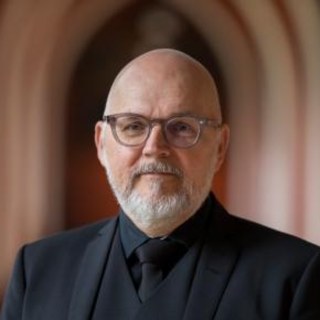 Carl-Anders Säfström · Professor emeritus vid Maynooth University och ordförande i Arete tankesmedja
Manifestet
Essän återvänder till A Manifesto for Education av Gert Biesta och Carl-Anders Säfström, publicerat i Policy Futures in Education 9(5), 2011. Den hölls som inledningsanförande vid symposiet ”Revisiting the Manifesto for Education” på Mälardalens universitet den 7 maj 2025.
År 2011 skrev Gert Biesta och Carl-Anders Säfström ett kort manifest om vad utbildning är och kan vara. Texten fick snabbt ett eget liv. Den har översatts och tryckts om i allt från ett norskt förskollärarförbund till en dansk antologi om pedagogikens grundtexter. Det var också meningen: manifestet skulle släppas fritt.
I maj 2025 samlades kollegor från Irland och Sverige på Mälardalens universitet i Eskilstuna för att återbesöka manifestet. I stället för traditionella akademiska föredrag svarade deltagarna med måleri, fotografi, jazz, teater, hiphop och berättelser. Dagen avslutades med att hundratals gula servetter med meningar ur manifestet singlade ner från ljusgårdens tak – en hyllning till motståndsgruppen Vita rosen, vars sista flygblad spreds över tyska städer under andra världskriget.
I sitt inledningsanförande, som publiceras här, läser Säfström manifestet genom de grekiska begreppen Chronos och Kairos. Chronos är den linjära, mätbara tiden som skolan och den moderna kapitalismen organiseras efter, där elever blir resultat som kan vägas och värderas. Kairos är den levda tiden, här och nu, där vi lever tillsammans med andra. Hans slutsats är att friheten inte kan delas ut genom mätning och sortering. Den bekräftas i själva undervisningsögonblicket, där lärare och elev tillsammans gör undervisningen.
Texten publiceras i sin helhet på engelska nedan.
✦ ✦ ✦
Introduction
The manifesto for education (Biesta/Säfström, 2011) is a significant text in educational philosophy, reprinted in so many different contexts, from a Norwegian union for preschool teachers, to a volume on foundational texts in education, and everything in between. That was also what we had hoped for the text, that it should take on its own life and multiply itself into different languages and publications, out of our control. We wanted to set the text free, release it to form its own trajectory.
The text were written under a spell of creativity, and already when written it we realised that the text were responding to deeper layers in culture, and that it were voicing those undercurrents masked by the enormity of the neoliberal and authoritarian capitalism that washed over us with brutality and a violent rhetoric directed towards education research, school teachers and teacher education. The text was written under a feeling of seizure that we were writing against colonialisation of and attacks on education generally. But also that we had entered a moment of absolute clarity and absolute resistance to the ongoing attacks on an educational reality.
We joked, already when the words kept coming to us, that there should be a plaque in the floor under the table to mark the historical event of resistance. All that was of course made in a playful way, the whole process of giving voice to the manifesto was as playful as it was serious, as play is for children.
In order to celebrate that it was 15 years ago the manifesto was written in the café at Mälardalen university we arranged a symposium 7th may 2025, at Mälardalen university. Instead of treaten the manifesto for education as a thing, we wanted to emphasise the creativity of the moment, the event itself, the very state of flow that had given rise to the text. We invited colleagues from Ireland and Sweden to take part in the one day symposium. We asked of each and every one to respond to the manifesto, but rather than in a traditional academic way, to take starting point in the aesthetics of the moment, to enter into the playfulness that the manifesto was a result of.
And the result exceeded the wildest expectations. The responses took form in paintings, photos, a jazz piece for piano guitar and drums, fictious stories, theatre, exploration of the rhythms of hip hop, in monologues, a song, and more.
The day ended with a spectacular performative art piece set into motion by the Irish artist Gleen Loughran. From the top of the atrium from high under the ceilings, Gleen let go of hundreds and hundreds of pieces of starched yellow napkins on which sentences from the manifesto were handwritten by Gert and myself, in addition to sentences from the audience in response to the manifesto and the day.
The napkins beautifully singled through the air, not only as an artful event in its own right, but also as a homage to the resistance of university students and lectures of the White Rose group, executed by nazi Germany when they were caught spreading a pamphlet in the university against the brutal regime. Their last pamphlet were smuggled out of nazi Germany and were multiplied in thousands and spread by the allies from airplanes over German cities.
It gave the performative piece some depth and also actualised the threat we live under today in universities as well as in societies as a whole. The threat from fascist forces to take hold once again, and which the attacks on education have already prepared for, by weakening the relation between education and democracy, solidarity and equality.
That the event took place in Eskilstuna was also a homage to the fearless anti-fascist chief editor J.H. Selander (1887-1964) of the daily paper Eskilstuna Kuriren who during the second World War were a forceful voice against fascism, national as well as international, and wrote against authoritarianism in any form.
The symposium itself, was a testament to what happens when people are set free to create, to play, in ways that embodies as well as express the sensibilities through which we connect as humans, as well as more than human: To celebrate what makes education to what it is.
The following is my contribution, which was given as a talk introducing the day. At the end of the text is a bibliography over some of the texts that have inspired me to write this text, but also some of my own texts in which themes here touched upon are explored in depth.
✦ ✦ ✦
Revisiting the manifesto for education
Revisiting means visiting a previous visit. And maybe that is all we can do: visit our own lives as a visiting in infinite regress, playing out as life almost lived. Then, we repeat this as time goes by, distancing us from our lived time. Distancing us from the living time we live with others in the present, which emerges from somewhere other than from a linear ordering of visited lives.
Lived time is what the ancient Greeks called Kairos and is rather than the ordering of life in a sequence from here to there about the directedness of all times, past, present, and future in the now, in which we live with other people and other living beings in the here and now. The time of Kairos is here and now. The time of Chronos is the ordering of and sequencing of our lives into a past, a present, and a future, a linear time in which we move along from here to there in determined sequences and in which the present are dissolving as it takes shape. Or, as someone said, is the present now or now or now? Reducing the present into a question of infinite regress (is the present this second, this microsecond or this nanosecond or…)
The manifesto was intended as a break with linear, chronological time, what the Greeks called Chronos, repeatedly hammering out the temporality of the day and night through the same pattern, the exact mapping out of time itself, as past, present and future. A mapping which made it possible to realise the past into the present and further into the future as controllable by being measurable. Chronos, as I understand, then, is not only about linear time as such but is also about the map itself creating the conditions under which one can only think of past, present and future as linear and as progressing towards the fulfilment of time, towards the end of time itself (which is the consequence of linear time [of modernity] as Richard Rorty are pointing out)
Chronos, in chronological time, give birth to an inevitable reality by reproducing the conditions under which the order of that reality can exist as linear and are as such a negation of living time in which being exists as such. Being time take shape in the present, in which one lives here and now and from which past and future emerge as such: Always in the present. Chronos is not about living time but about the external ordering of that living. Therefore, from the point of Chronos alone, we can ever only exist as objects of time, as things.
Such reality in which time is objectifying our very being, is essential for schooling as well as modernity, in which time produces outcomes (such as students and workers) that can be measured, valued and circulated as things in the economy of capitalist life, circulated as things of more or less value, as if life’s worth can be calculated. That also means that Power can exist in social life as an exercise in which all people are attached to an unequal distribution of life’s worth in the social sphere, making some people worthless and on the margins in the bigger scheme of things. In contrast, others have the unquestionable right to exist as already given by their social and material position.
The worth-less have no voice and no appearance; they are on the margins of what is considered real as such. It’s even questionable if they exist at all, as other than the background for the successful people, those who embody the real as an attribute of their freedom of forming a good life for themselves ruling others. The time of Chronos, chronological time, and linear time make all this possible and is, as such, the time of modernity and capitalism.
Schooling, invented by the ancient Greeks, take shape in modernity, as the tool through which the reality of Chronos is realised in every new generation. Schooling is an expression of Chronos, of chronological and linear progression. Without Chronos, schooling could not exist as a guarantee of freedom for some and unfreedom for others.
The manifesto disrupts such understanding of the reality of schooling by claiming that freedom is not owned by certain people to be distributed through a value system of more or less, but belongs to all people and extended to all living and is to be confirmed in the gesture of teaching. And since freedom can not be understood through Chronos, and only as a break with Chronos, freedom is beyond Chronos; it does not belong to Chronos at all and is consequently non-achievable through Chronos.
Freedom is the freedom of life and existence, that is, of being time and appearing as time and through time. Freedom is rather than a consequence of the external ordering of life, steaming from the living itself, the life energy as such. Its roots are not primarily social, political, or chronological, but existential. Freedom has to do with the equal right to exist in all life. Not only human life.
”Freedom has to do with the equal right to exist in all life. Not only human life.”
The manifesto, then, read in this way, stipulates two things when it comes to freedom: firstly, that freedom belongs to all people and all life, and secondly, that a teacher is someone who has already realised their, or they freedom, and from such realisation are verifying the freedom of the other, the freedom of the student. A teacher’s interest, in other words, is in the freedom of the other, not for him or herself.
Teaching has a direction, but not in ordering, measuring and valuing the reality of the other. Such an order is already the case; we are already living in modern capitalism, even in an age of authoritarian capitalism, with its hyperextension of control and management of all aspects of life, not the least through the mapping of our souls, transferred into the grandiose-ness of AI technology.
The direction of teaching is beyond the distribution and mapping of life towards life itself, verifying in the teaching gesture the incalculable right to exist and the incalculable value of life.
That is, education and teaching taking form in the manifesto do not require the student to fall into the land of inequality to be taught. It does not equalise education and teaching with the distribution of things valued through measurement systems, either inside or outside schooling. Instead, it offers a way out of such a predicament.
The manifesto denies Chronos as the driving force of and/or at the centre of education. It denies that the task of education is to embody modernity and capitalism to produce wealth for the individual and the state’ The very direction of education and teaching, which gives meaning to education and teaching, is the freedom of the other. Therefore, the manifesto is in itself a gesture, a disruption of the managerial function of schooling and pedagogy in modern societies, rather than being a tool for the execution of capitalist life. The function of Chronos as education is to perform a particular ordering of reality in which education and pedagogy can only be understood as effective time management.
Schooling is the managerial function of a state, a function today transferred by market capitalism of a particular kind, in which the energy of a market is to be producing things as more or less valuable, and where children are such things, being put on a scale of being themself more or less profitable. The marketisation of schooling is transforming the zeitgeist of what it means to be a child and human in this world and at this point.
The seriousness of the situation to which the manifesto offers resistance is not only in thinking education and teaching differently but in the profound objection to reshaping what it means to be human and more than human others. The manifesto is a gesture directing us towards a new beginning, another starting point, not only for education and teaching but for recasting the indisputable worth of all life. As such, the manifesto is much more radical than I think we fully understood when we were writing it in the café on those napkins.
I have before today always treated the timelessness invoked by the manifesto as something of an impossible possibility, as introducing a fundamental ambiguity within the centre of education, which, through this ambiguity, would be hindering every attempt to put the movement of education to an end. To be breaking with attempts for a final truth, an end of time that would end being as such, blocking the very function of education and teaching in verifying the freedom of the other.
Freedom, I now think, entirely has to do with Kairos, but not in a dialectical relation to Chronos, making measurable time the real deal, only occasionally to be broken by the appearance of living time, of Kairos, to produce being as something of a synthesis of the two times at play. To get to what I now think, I will recall an ancient Chinese proverb that says: ‘Teacher and student together make the teaching’ (from Dogan 13th century Zen master).
That is, the moment of education is an event of togetherness that is completely shared between teacher and student, and as such, complete in itself, education is profoundly autotelic. It is even beyond shared and rather an existent within the act of teaching. An existent that makes the teacher and student appear through the teaching event, and in which the teaching of that event is an embodiment of freedom, of being time. That is, education itself, education as education, is an expression of and an embodiment of being time.
The freedom of the other is expressed through their unquestionable right to exist and to appear in the present. The teaching moment, the moment of teaching, is a double act of extensions of freedom through verification of the freedom of all beings.
Revisiting the manifesto, then, is a visit in which the time of the manifesto is constantly bringing us into the present in which we live here and now. The manifesto is a call for paying attention to the unfreedoms of our present time and asks us to speak up and to act, to speak for education, to speak for freedom, our freedom to exist in our authentic form, whatever that form is.
The manifesto breaks into discourses of inequality and unfreedoms to verify the foundational equality embedded in the very energy of everyday life, in which we live with other people as well as animals, trees, mountains and clouds, on which we depend.
No borders!
Further reading
- Biesta, Gert/Säfström, Carl Anders (2021): “Et manifest for paedagogikken” [A Manifesto For Education] (Translated by Rasmus Vilhem Steen Nielsen). In: Cone Lucas (ed): “Paedagogikkens fundamenter” [The Foundations of Education] Copenhagen: Hans Reitzels Forlag.
- Biesta, Gert/Säfström, Carl Anders (2011): ”A Manifesto for Education”, In: Policy Futures in Education, 9/5, pp. 540–547
- Butler, Judith (2020): “The Force of Non-Violence: The Ethical in the Political”, Verso
- Cassin, Barbara (2020): “Jacques the Sophist. Lacan, Logos, and Psychoanalysis”, New York:Fordham University Press.
- Cassin, Barbara (2014): “Sophistical Practice. Towards a Consistent Relativism”, New York: Fordham University Press.
- Derrida Jacques (2014): “The Margins of Philosophy”, Chicago: University of Chicago Press.
- Dōgen, E. (2006). Master Dōgen’s Shōbōgenzō. Translated by Gudo Nishijima and Chodo Cross. Book Surge Press.
- Rancière, Jacques (2007): “On the Shore of Politics”, London: Verso.
- Rancière, Jacques (2006): “Hatred of Democracy”, London: Verso.
- Rancière, Jacques (2000): “Le Partage du Sensible: Esthetique et Politique”, Paris: La Fabrique-editions.
- Rorty, Richard (1980): “Philosophy And the Mirror of Nature”, Oxford: Blackwell.
- Säfström, Carl Anders (2025). “Sustainable Education in the Flow of Life”, In: Windsor, Sally; Franck, Olof: Sanders, Down, “Paradise lost? Love and Care. Narratives For And In Sustainability Education”, International Explorations in Outdoor Education 20, Princeton New Jersey: Springer, pp. 11-24.
- Säfström, Carl Anders (2023): “Education For Everyday Life: A Sophistical Practice of Teaching”, Princeton New Jersey: Springer.
- Säfström, Carl Anders (2020): ”A Pedagogy of Equality In a Time of Unrest. Strategies For An Ambiguous Future”, London: Routledge.
- Säfström, Carl Anders (2003): “Teaching Otherwise”, In: Studies in Philosophy and Education, 22/1, pp. 19-29.
- Säfström, Carl Anders/Biesta Gert (2011): ”Et manifest for Utdanning”, Forste Steg, 3.
Carl-Anders SäfströmProfessor emeritus vid Maynooth University, Irland, och ordförande i Arete – folkbildningens och pedagogikens tankesmedja. Hans forskning rör utbildningsfilosofi, med särskilt intresse för relationen mellan utbildning, jämlikhet och demokrati.
Essäer på Arete.nu uttrycker skribentens egna uppfattningar.